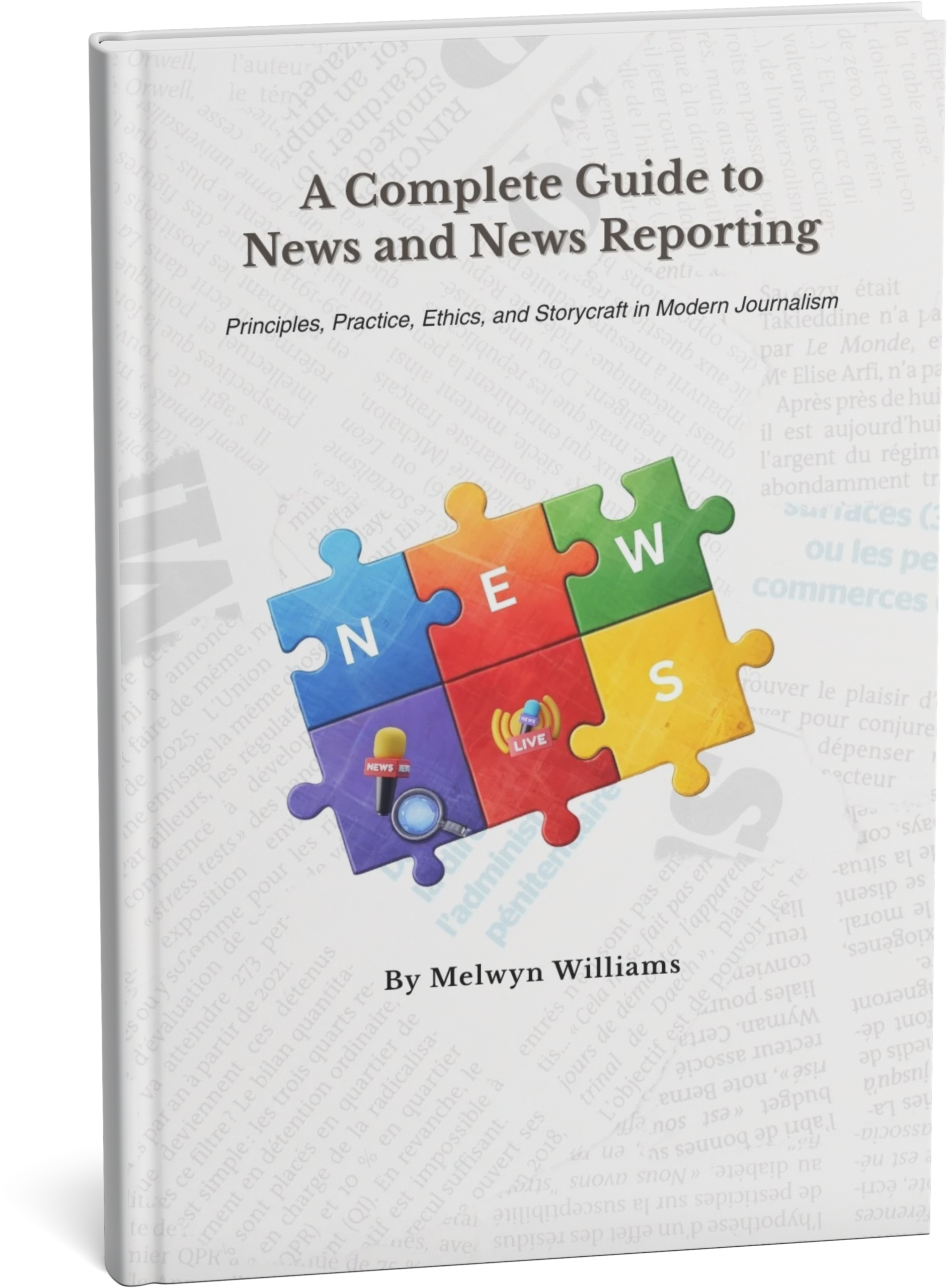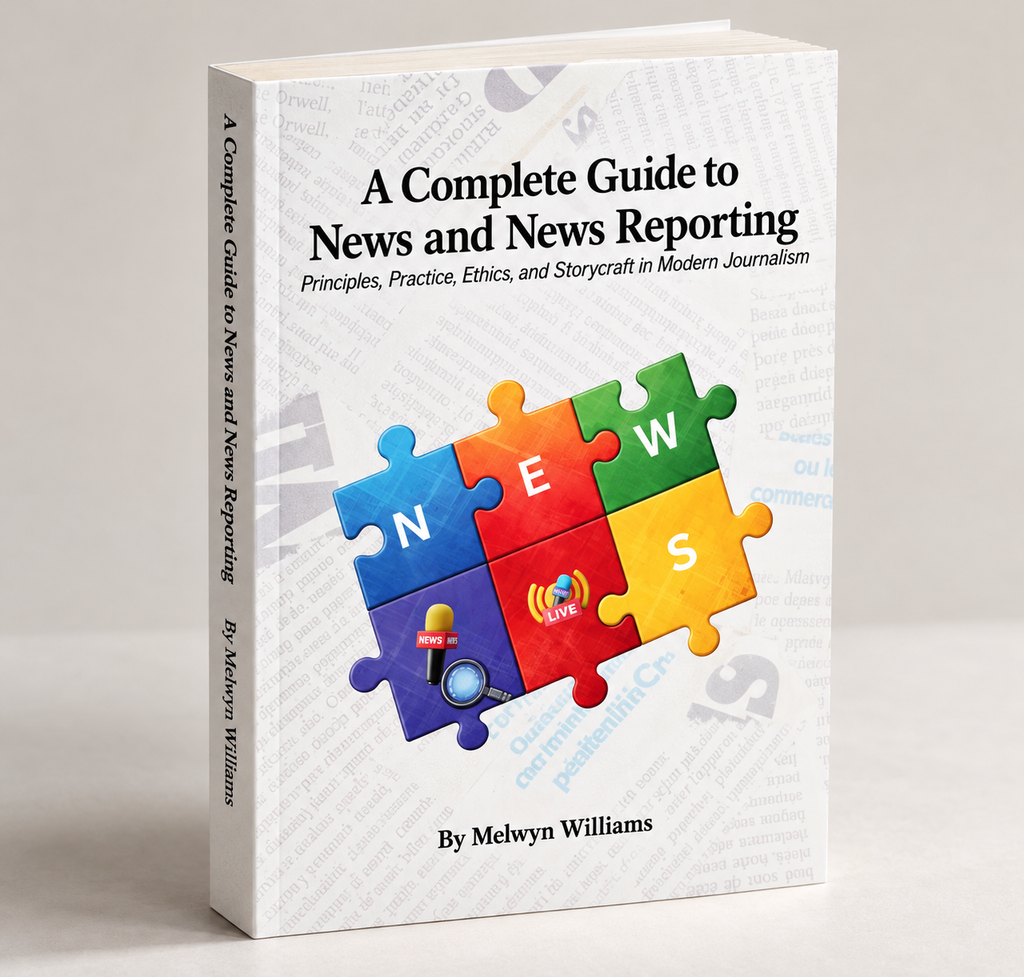
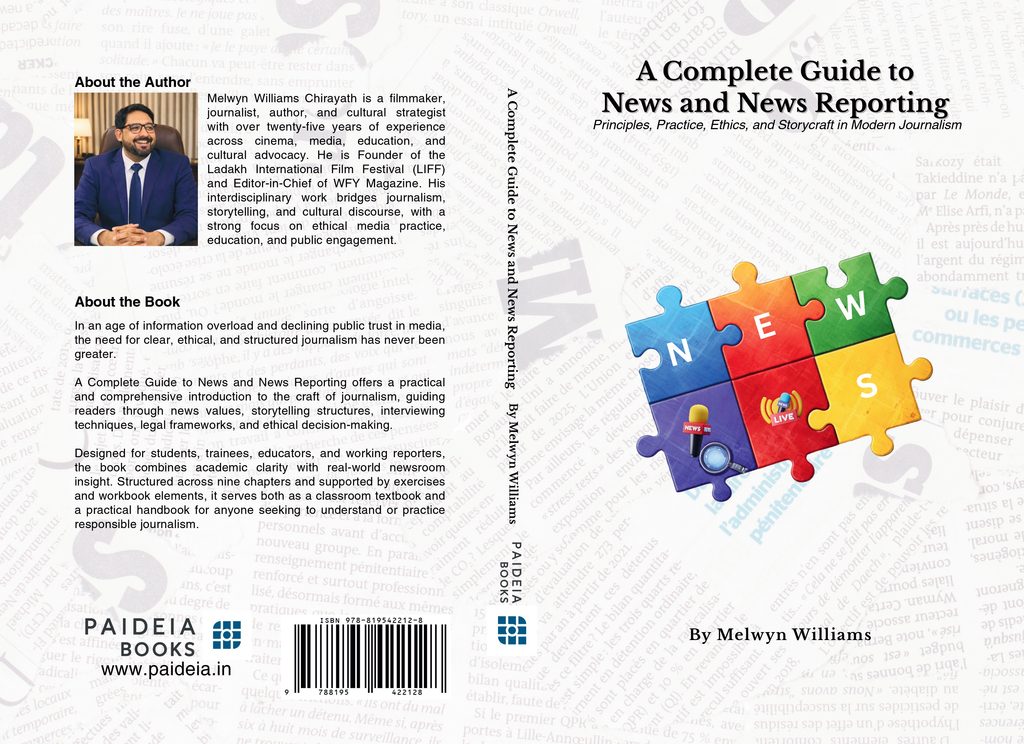
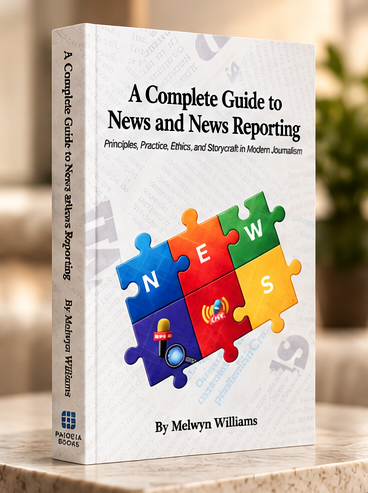
A Complete Guide to News and News Reporting
By Melwyn Williams
Click to buy
Published By Paideia Books

PAIDEIA BOOKS
Foreword By:

Jayanti Ranganathan
Senior Journalist
Former Executive Editor, Hindustan
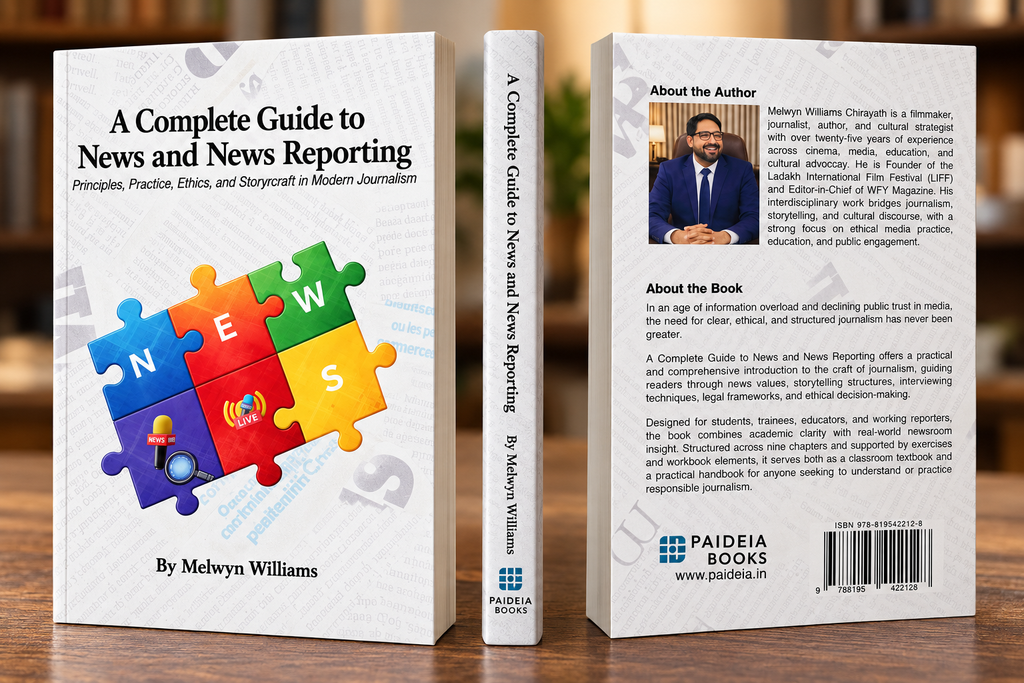
Jayanti Ranganathan is a senior journalist, author, and media professional with over three decades of experience in Indian print media. She has served as the Executive Editor for prominent publications like Hindustan and Nandan, and is currently a Consulting Editor with Hindustan Media Ventures. A prolific bilingual writer and scriptwriter, she has authored over 16 books, including Mamrazzi, Sugar Daddy, and Apne Apne Burj Khalifa, and is widely recognized for modernizing contemporary Hindi literature for younger generations.
A Complete Guide to News and News Reporting
Principles, Practice, Ethics, and Storycraft in Modern Journalism
Journalism is changing faster than ever, yet its purpose has never been more essential. In a world saturated with information, noise, and digital distortion, the journalist remains the last line of clarity, credibility, and civic truth. A Complete Guide to News and News Reporting was born from this conviction: that journalism is not merely a profession, but a public trust that must be taught with rigor, practiced with integrity, and preserved with care.
Across nine comprehensive chapters and fifty-six structured parts, this book offers a full journey through the craft of reporting. It begins where journalism itself begins: with the question of what counts as news and why it matters in society. From there, readers move through the identity and responsibility of the journalist, the architecture of compelling storytelling, the mechanics of interviews, beats, and headlines, and the realities of legal and ethical constraints in the field.
Each section combines real-world insight with classroom-ready clarity. Whether you are a journalism student encountering news values for the first time, an educator shaping a curriculum, or a working reporter seeking to refresh your fundamentals, you’ll find here a roadmap grounded in decades of professional experience. The writing is practical without losing depth, ethical without being didactic, and modern without abandoning the timeless principles that uphold the craft.
This book is also deeply human. It speaks to the courage required to stand firm in a “post-truth” era, the empathy needed to interview people at their most vulnerable moments, and the discipline necessary to report fairly under pressure. Accompanied by a workbook and teaching resources, the text is designed for both self-study and institutional adoption.
Journalism does not survive on technology, it survives on journalists.
This guide aims to prepare them. This can be a handbook to anyone on the block
SYNOPSIS
A Complete Guide to News and News Reporting is a comprehensive manual for understanding and practicing journalism in today’s complex media landscape. The book covers the complete reporting process, from identifying what qualifies as news, to structuring stories, interviewing sources, verifying facts, navigating legal frameworks, and adapting to digital-first newsrooms.
Designed for beginners and professionals alike, the guide balances academic theory with practical insights drawn from real newsroom experience. It includes a companion workbook, making it suitable for classroom instruction, media training programs, and self-directed learning.
Across nine chapters, the book equips readers with the essential tools of the modern journalist: ethical judgment, structural discipline, clear writing, source protection, legal awareness, and digital fluency. It serves as a foundational course in journalism and a practical reference for working reporters who want to refresh their craft.
Author Statement
Journalism matters. How we practise it matters even more.
In an age where information travels faster than ever, distinguishing facts from misinformation, reporting responsibly, and maintaining public trust have become increasingly important. Journalism is not merely about gathering information. It is about asking the right questions, verifying facts, understanding context, and communicating with accuracy, fairness and ethics.
With this in mind, I am pleased to share my book, A Complete Guide to News and News Reporting: Principles, Practice, Ethics, and Storycraft in Modern Journalism.
The book is designed for journalism students, aspiring reporters, educators and working media professionals. It brings together the fundamental principles of journalism, newsroom practices, reporting techniques and ethical considerations in a practical, structured format.
My hope is that it will serve as a useful learning resource for those entering the profession, as well as for those who wish to revisit and strengthen the foundations of responsible journalism.
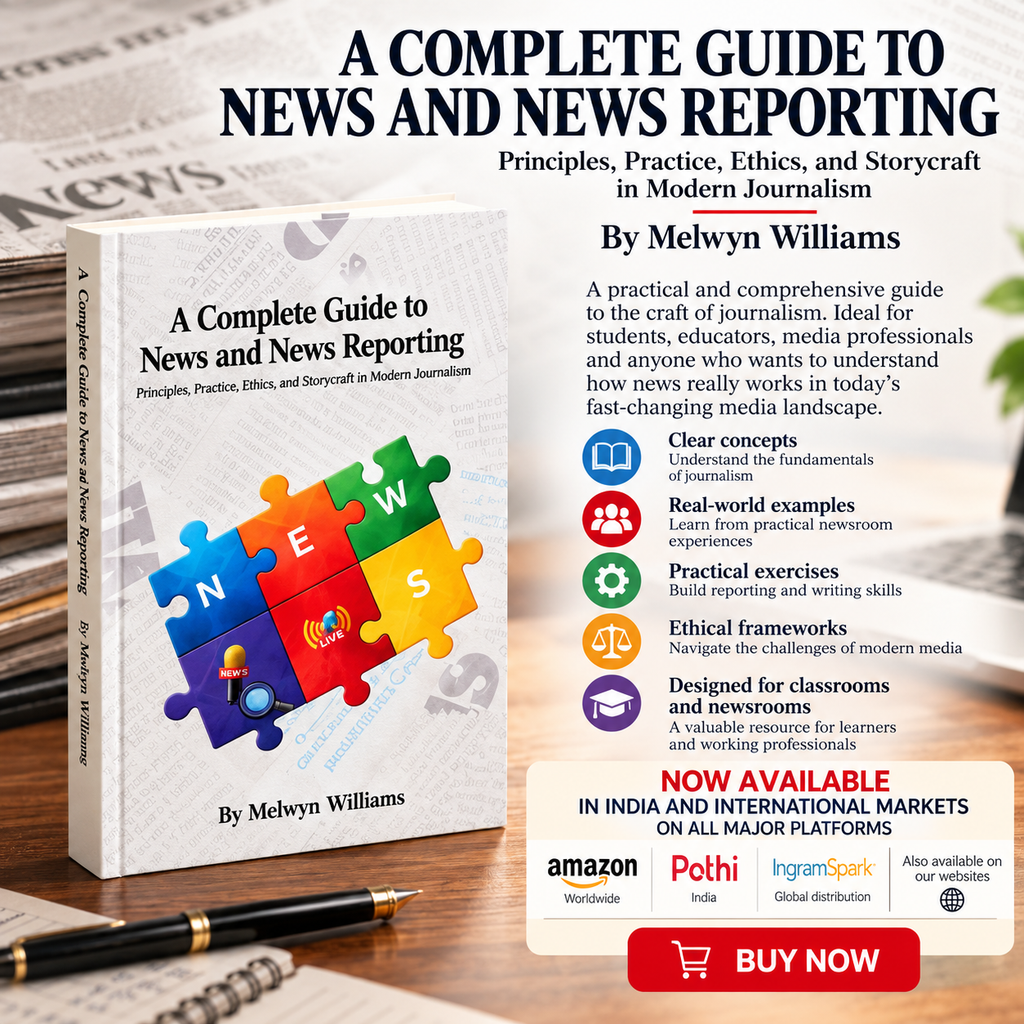
The book is now available in India and internationally through major book platforms.
For those interested in exploring the book, I am sharing the page below, where you can find more details and choose a suitable purchasing option.
Thank you for taking a moment to learn about this work. If you know students, educators or professionals who may find it useful, please feel free to share it with them.
Explore the book and find your preferred buying option:
If you reside outside of India then your best buying option would be Amazon. Kindly click the button below to explore:
If you are residing India then your best buying option would be Pothi. Kindly click the button below to explore:
WHY THIS BOOK? (Relevance & Purpose)
• Journalism is in transition
Audiences are overwhelmed by information, misinformation, and speed-driven content. The need for clear, ethical, structured reporting has never been greater.
• A practical, modern guide is missing
Most existing textbooks are either outdated, overly theoretical, or disconnected from digital realities. This book integrates:
- classic principles
- contemporary newsroom practices
- legal frameworks
- digital reporting techniques
- ethical challenges
• Bridges academia and industry
The book is carefully structured to serve:
- university curricula
- media training centres
- newsroom onboarding
- independent learners
• Responds to global concerns about press trust
In an era of declining faith in media, this book reaffirms the reporter’s responsibility and equips readers to uphold credibility.
• Multiplatform relevance
The text spans print, broadcast, and digital journalism, making it usable across disciplines.
BENEFICIARIES
Primary Audiences
- Undergraduate journalism students
- Postgraduate mass communication students
- Journalism educators and faculty
- New reporters and interns
- Media training academies
- Independent journalists
Secondary Audiences
- Media literacy programs
- NGOs involved in civic education
- Press clubs and newsroom training units
- Content creators transitioning to responsible reporting
This diversity of beneficiaries increases adoption potential across institutions.
WHAT MAKES THIS BOOK DIFFERENT?
- Structured for Learning
56 modular parts across 9 chapters allow instructors to assign material in weekly segments.
- Balanced Approach
Theory + practice + real-world examples + workbook = a complete learning system.
- Clarity and Accessibility
Written in a warm, instructor-like tone without sacrificing academic rigor.
- Ethics at the Center
Every chapter reinforces professional responsibility in an era of sensationalism and misinformation.
- Digital Integration
Modern chapters on digital tools, online sourcing, verification, and newsroom workflow.
- Workbook + Teaching Tools
Includes exercises, case studies, and discussion prompts.
Market Need and Readership Demand
Journalism programs worldwide continue to expand. Newsrooms increasingly expect trainees to arrive with foundational skills in:
- news judgment
- structure
- ethics
- clarity
- writing for multiple formats
- This book directly supports those skill sets and fits neatly into:
- “Introduction to Journalism”
- “News Reporting and Writing”
- “Media Literacy”
- “Newsroom Training”
- “Mass Communication Foundations”
Because the book includes both instruction + workbook, it has strong potential for adoption as a core course text.
DETAILED CHAPTER STRUCTURE
Chapter 1: Understanding Journalism
Part 1: What Is News and Why It Matters
Part 2: The Journalist’s Identity and Function
Part 3: The Anatomy of a Story
Part 4: Structures of Storytelling
Part 5: Clarity, Curiosity, and Credibility
…and so on through all 9 chapters and 56 parts. There is a workbook at the end of each chapter.